The Nervous system and an expansive life
*^-^ in case you’d rather listen to me read the blog to you ^-^*
apologies for the shuffling in intro :)
“We do not rise to the level of our goals, we fall to the level of our systems” - James clear
** Heads up, this one turned out to be a long one :) - approx 30 min read.
*Please note: I am not a licensed therapist, nor an expert in neuroscience. My thoughts are based solely on lived experience and pieced together research & ideas heard/ read on social media and within online containers. Take what resonates and leave the rest.
My lived experience with Spiritual Exploration:
In my mid 20s, freshly independent, living on my own and building a little life for myself, I began a deeper exploration of my spiritual beliefs. I knew the religion of my childhood did not resonate anymore despite some ideas of right and wrong still being deeply embedded. I had considered myself agnostic of sorts, or simply spiritual - believing in energy and something greater than myself, but I felt that really I was just scratching the surface of Truth, knowing that my human mind was not meant to comprehend the vastness of the Universe.
I began trying out meditation (which a friend in childhood convinced me was “sinful”) and reading about Buddhism, enjoying the concept that we are not meant to just accept another’s words as Truth, but to explore the ideas and methods ourselves. It amazes me now that this was such a revolutionary concept for me.
I read Many Lives, Many Masters at the suggestion of a dear friend and felt such a profound sense of resonance that my spirit opened to the possibility that other Truths might be possible, that other religions might hold Truths as well, that I did not need to be so rigid or so lax in my beliefs. I left it at that for a few years, loosely considering myself Christian/ Agnostic.
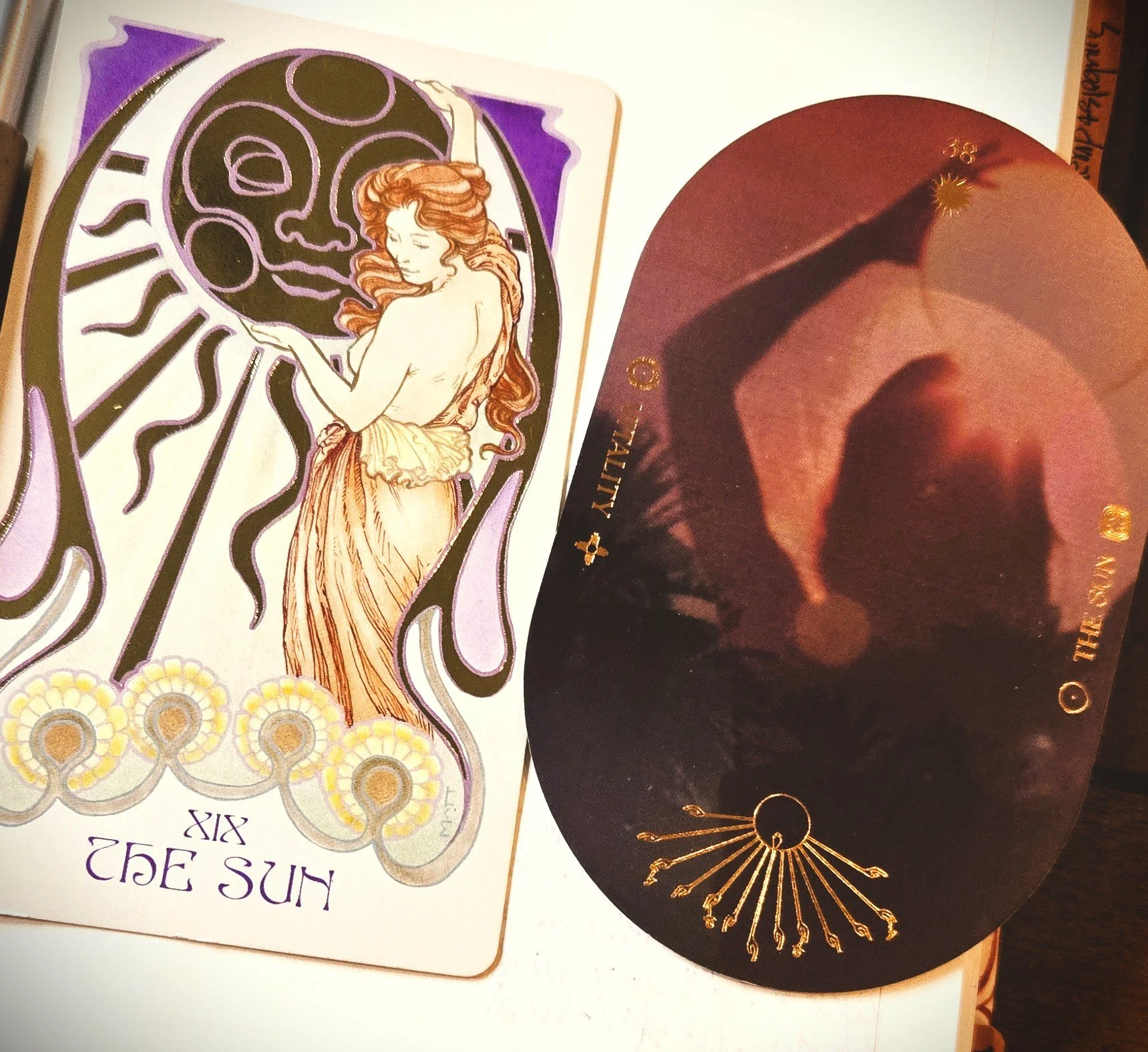
After a while I began dabbling in Tarot, crystals and astrology, feeling a bit rebellious and a bit unsteady in how “bad” that made me, and yet they spoke to something whimsical and magical within me. As I found resonance in various practices, I got a bit more comfortable with the idea that intuition, vibrations and energy were neither good nor bad, it just depended on how you used them.
I began to flirt with the idea that perhaps I didn’t really believe what I was taught to believe. In my mind I already knew this, but my body held fast to the beliefs instilled in me at a young age. My body feared condemnation and being an outcast, and rightfully so at an epigenetic and evolutionary level. In not so ancient times, being outcast often meant death. It’s amazing what we will agree to if we believe our safety and soul are at stake.
So I began to explore more Earth-based religions, the religions of my ancestors. I joined women’s circles and tried new forms of presence and meditation. I opened myself up even more to the possibility of other Truths, other deities, other ways of living and being. It felt right and also scary, my foundations were being threatened. I understood how deconstruction can feel like a total loss of identity, so much so that one simply cannot do it for fear of losing everything they’ve ever known. I shook, but did not fall back into old ways of being.
Feeling bold, I joined a container meant to explore the various Divine Feminine archetypes over a series of weeks. I played with my own rituals and ceremonies, shaky but open minded. I explored neuroplasticity to change my thought patterns and set intentions to work on healing my father-wound. And then came the day I caught an illness and was put on meds that made me anxious (unbeknownst to me). This just happened to be one of the days I was playing with a new ritual, after which I found myself in the throes of a nice little anxiety attack - something I’d never experienced before so had no framework for how to handle.
Totally freaked out by the anxiety, over the next few weeks I stepped all the way back from my exploring, needing to get fully out of the spiritual and back into my body. I completely disassociated, floating above myself. My body had pulled out all the stops, shoving me years back behind my protective layers. I had not yet recognized the importance of gradually increasing my nervous system's capacity for the unknown and uncomfortable while consistently reassuring it of my safety.
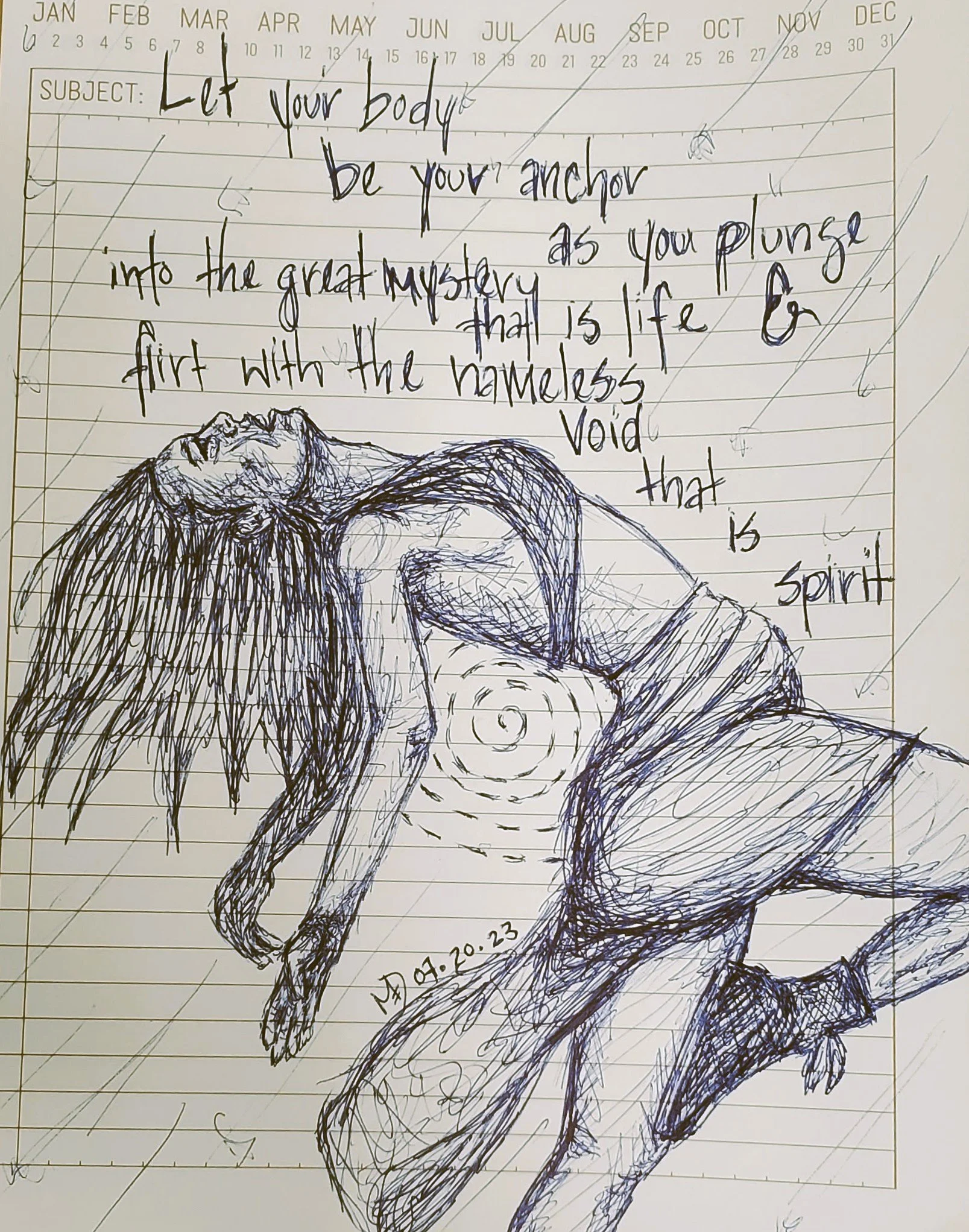
The nervous system is meant to expand and contract, explore and come back - the way a child will be brave and run away to play, but intermittently come back to their parents for safety and stability. They’re learning to trust themselves within the boundaries provided by a stable caretaker. Similarly, you’re slowly increasing your capacity for the unknown and unfamiliar, then regulating back into a felt sense of safety.
I decided the best way to get back into my body was to get back to DATING from my completely disassociated, wounded-child self (hindsight, this was a terrible idea). I thought it would be a distraction, a way to really be in the physical world. Little did I know, I’d be getting a front row seat to my father-wound that I had just set an intention to clear out.
The man who came along was the epitome of my childhood wounding. The relationship was toxic and I knew it and yet I just could not pull myself out of it. I couldn’t stop abandoning myself, I just wanted to be chosen. My wounding triggered his and his triggered mine, we were mirrors for each other (as relationships are). We were just children running with scissors and open wounds.
Ironically, it took me really getting back into my mantras and meditation and stepping back into women’s circle to find the fortitude to finally snap out of it nearly 11 months in. The thing that scared me into this relationship, walked me right back out. My nervous system, stretched to its limit by me pushing it past its comfort zone without doing the groundwork of regulation, was finally becoming regulated again.
My next relationship was entered from a slightly more regulated nervous system, and yet I soon found myself abandoning myself in different ways, speaking up but never fully stating my needs, performing to keep the relationship happy from a surface level, doing what I needed to push the relationship forward even if it didn’t yet have the foundations needed.
When that relationship ended, I finally understood that I needed to take a huge step back. I realized every single relationship I had ever been in was entered from a place of deep wounding. I was never truly coming to them from a place of secure self-alignment, but rather from a place of “pick-me.”
How could I be the partner I was asking someone else to be from a place of self-abandonment? How could I truly have authentic connection if I was showing up as my wounding rather than my true self? Who even is the true version of me underneath it all?
Needless to say, through these relationships, my father-wound did end up getting some real-time attention and healing (be careful what you wish for, you just might get it).
We probably all have some sort of coping mechanism we'd like to change that we knowingly or unknowingly picked up in childhood that made us feel safe then, but is limiting us now. No, it doesn't mean there's something wrong with us or that our childhoods or our parents were bad, but you can't build the life of your dreams on habits that keep you stuck and you can't change something you won't look at. This isn't about blame, it's about taking ownership for the life you want to create and holding yourself accountable for the ways YOU are keeping yourself stuck in this moment by holding onto outdated patterns.
Here and now, in my desire to let go of all of my old patterns and programming based on childhood experiences, I’ve really come to understand the importance of nervous system regulation as a foundational practice when making fundamental shifts in how you’re showing up and participating in the world.
**********
The Nervous System:
“We do not rise to the level of our goals, we fall to the level of our systems” - James clear
This quote from his book Atomic Habits (Which I have not read yet) is presumably referring to systems theory (“an interdisciplinary framework exploring how cohesive groups of interrelated, interdependent components work together” - a change in one system affects the others e.g. family dynamics affecting society as a whole, ecosystems, organizations, internal family systems etc.), but applied to our daily habits as a framework for reaching our goals.
Here I’m applying the thought to the NERVOUS system.
My take: Our nervous system is the crux upon which our life rests, the level of regulation sets the tone for how expansive your life can get. A regulated nervous system is the foundation for cultivating the life of your dreams, for the depth of connection you desire, for spiritual awakening, for taking risks, for creating, for shedding layers of yourself that are no longer aligned with the life you’re creating, for discovering who you really are and what you truly want underneath all of your walls and conditioning.
A dysregulated nervous system, on the other hand, stops you from pursuing the life of your dreams as a means of self protection. How can you call more into your life if you are already overwhelmed by the life you have? How can you make fundamental and structural changes in your life if you are not feeling stable within your life already? How can you face the fear of the unknown if you are not feeling safe within yourself?
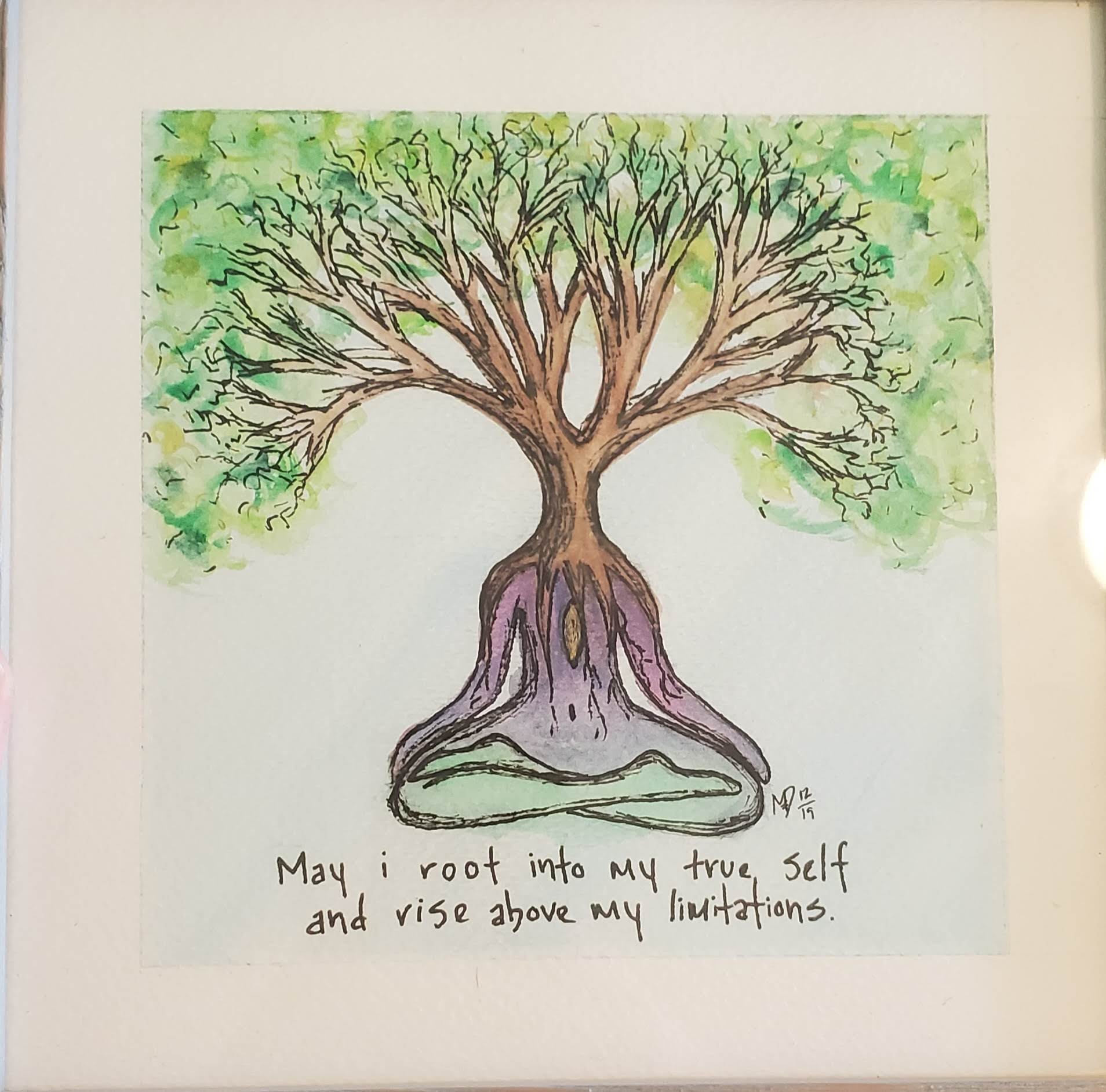
Your goal to make fundamental shifts in your life rests on the regulation of your nervous system.
With the help of the nervous system, we can begin to explore the possibility that we do not have to be who we have always been. We can leave behind the layers of ourselves that we constructed long ago to feel safe but which no longer align with the life we want to create for ourselves. We can begin to embrace new versions of ourselves using the tools and rituals we have adopted to reassure our bodies that we are safe as we explore the world through new lenses. Your lens shapes your life, shifting your lens can shift your life.
A deeper dive:
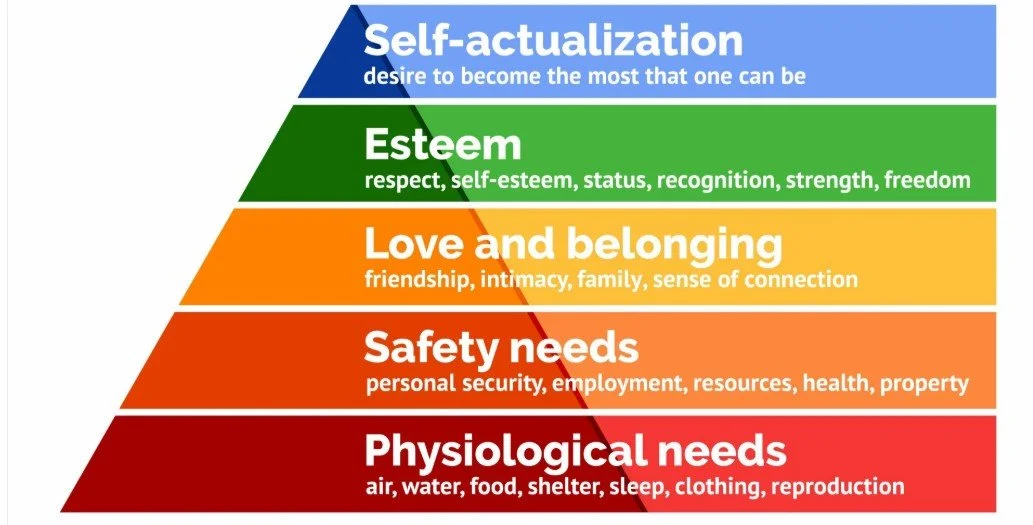
Following Maslow’s Hierarchy of Needs, safety is foundational for true connection, success and self-actualization. You cannot truly and deeply connect with others if you do not feel safe, physically, but also within your body and nervous system. Your body might be safe, but if you do not feel emotionally and neurologically safe, true sense of self and belonging are out of reach. Yes, you can pursue multiple levels of needs at once, but a dysregulated system keeps you stuck in survival patterns which limit the scope to which you can grow, evolve and connect. If you feel unsafe, you’re going to hide or lash out to create the safety you’re craving.
As Camille Craft often states, we’re sometimes more afraid of success than we are of failure, because failure is familiar. Your body and nervous system chooses the safety of the familiar (even if it is toxic) because it’s predictable rather than risking the unknown even if it’s healthy and desired. It’s protecting you, doing what it learned to do in childhood to keep you safe.
More on the Nervous System - “which is the body’s master control and communication network which receives sensory input, processes data and directs vital bodily functions.” It comprises the brain and spinal cord along with the nerves. It reacts to stressors in the environment putting you in “fight or flight” or “rest and digest” based on the feedback it receives, regulating how closed off or open you are to new experiences.
A regulated nervous system “reduces stress, improves physical health, enhances emotional regulation and mental health, boosts cognitive function, improves social connection and promotes healing and safety.”
Even chronic inflammation, which may be the single worst thing for your body - contributing to heart disease, cancer, neurological decline, mental health conditions, metabolic disorders, autoimmune conditions, weight management issues, gut health issues, high blood pressure, and repeated illness, is reduced by nervous system regulation.
So often we want a quick fix, “just give me a pill for it,” but what the body and mind truly need is patience, consistency and daily devotional practices.
The beautiful thing about neuroplasticity (the way you train your brain and ultimately your nervous system to think and react differently) is that it’s a practice, meaning you don’t have to get it right all the time or make huge structural changes in your daily life.
It’s showing up in small ways day by day to show your body that you are safe. It's recognizing when you’re stressed and stepping outside for a deep breath. It’s taking 10 minutes a day to move your body in a way that feels goooooood.
It’s noticing when you’re in a spiral and taking a walk to clear your head or shaking out the anxious energy. It's letting your body know that you’re here and reminding yourself that a stressful day does not mean that your life is in danger.
It’s taking some time to PLAY and do joyful things and surround yourself with a community of people who love you and make you feel calm. It’s getting a good hug at the end of the day.
It’s recognizing that most things in life are just NOT THAT SERIOUS. It's taking a minute to just pause and BE in your life without the distraction of a screen.
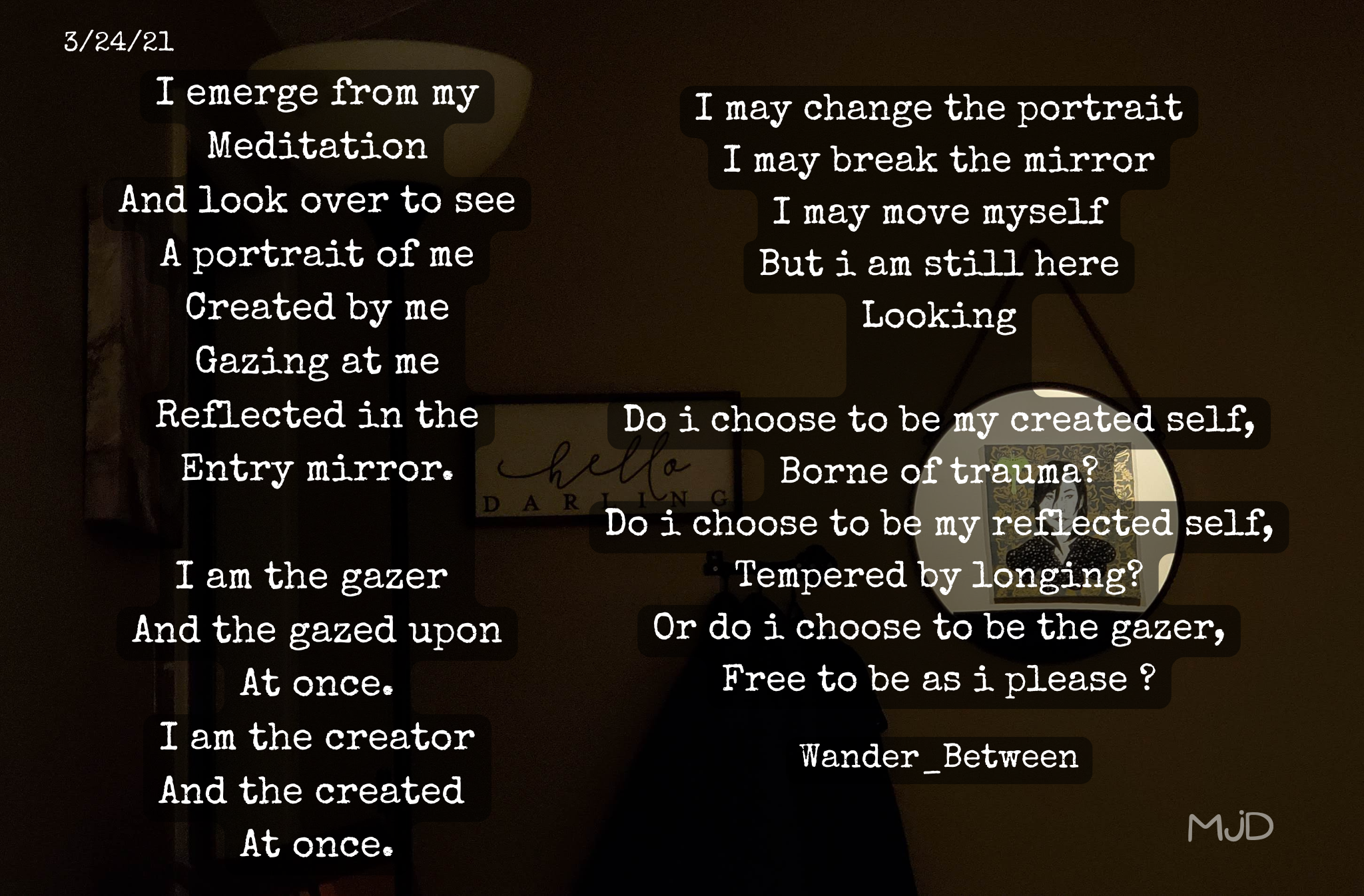
It’s looking at yourself in the mirror every morning and telling yourself “I love you, I’ve got you, and we’re fucking doing this thing!”
********
In Practice:
In today’s world of instant everything, entertainment everywhere and rest nowhere, our nervous systems are in constant overload. The “woo woo” is where we go to find peace and connection. Say what you will about meditation, forest bathing, rituals, chanting, mantras, vibes etc, but there’s a science behind it.
There are so many ways to regulate your nervous system which are totally worth it even if they’re woo woo:
Gratitude practice - shifting your mindset from perceived threats to appreciation, shifts mind to rest and digest, the tagged study actually shows the impact this practice has on cardiovascular disease. Positive mental health reduces the risk of CVD.
Prayer- Shifts your body from fight or flight into rest and digest, rewires neural pathways to reduce anxiety when used as a form of devotion rather than prayers for support or forgiveness which correlate with higher anxiety
Self-Acceptance- reduces shame and self blame so that healing can begin, supporting nervous system regulation and allowing for authentic connection, while constant self criticism shifts your nervous system to fight or flight. Your sense of self-worthshifts based on the state of your nervous system - when you are calm you can see yourself more clearly than if you’re anxious or numb
Breath Work - which stimulates the Vagus nerve signalling that the body is safe and increase oxygen to the brain helping you to think more clearly
Meditation - which shifts your brain into “rest and digest,” calming your mind and allowing for deeper receptivity and integration.
Chanting - Mantras such as OM or The Thunderbolt Mantra or the Guru Gaitri Mantra utilize vibrational frequencies within your vocal cords to activate your vagus nerve, thus calming your nervous system, reducing fear and enhancing focus and mood. These have helped me personally to clear my head when I'm swamped with swirling thoughts
Daily Affirmations - Harness neuroplasticity to rewire your brain’s pathways and nervous system to reinforce positive ways of thinking, lowering stress and promoting positive ways of thinking - think: I am worthy of love and acceptance, things are working out in my favor, I trust the path, I am loved and supported by the universe etc, whatever thought pattern you’re trying to turn towards a more positive framework
Drumming- synchronizes both brain hemispheres leading to growth in brain matter and changing consciousness and stabilizing the nervous system and assisting emotional regulation
Dance - serves to stimulate the brain and the body, releasing pent up tension and shifting the body out of fight or flight
Shaking it out and Somatics - Bring the body back to a calm baseline, releasing pent up energy and tension
Working out - reduces stress, lowers your resting heart rate, improves brain plasticity, lowers inflammation
Going for walks - Clears the clutter from your brain, balances your brain chemistry, triggers rest and digest
Being in Nature- improves your mood, reduces stress, brings you back to the present. Think forest bathing, sitting under a tree, listening to bird song, walking barefoot, being by the ocean, hugging your pet, energy work with horses, the red light of a sunrise, sitting in the sun, getting a house plant (&maybe talking to it) etc etc
Yoga - improves mental health, regulate stress, creates mind-body connection
QiGong - stimulates the vagus nerve, improves HRV, releases Fascia, acts as moving meditation
Ritual & Ceremony - provides predictability and signals safety to the brain and nervous system
Co-regulation - calming and grounding with someone else’s nervous system, interrupting stress spirals, building trust and intimacy, modeling healthy regulation.
Therapy - a form of co-regulation with a disinterested 3rd party, creating safe space to do deeper work, helps to release stored trauma both in the psyche and in the body - think Somatic therapy
Vibration - think tuning forks and musical hz, literally reduces tension by stimulating sensory receptors, signaling the vagus nerve to calm
Touch - think massage, hugs, snuggling even simply holding hands shifts the body from fight or flight to rest and digest
Tapping - uses rhythmic somatic stimulation to calm the amygdala - the brain’s fear and stress center
Chakras - are Energy Centers that correspond closely with major nerve plexuses, working with these energy centers serves as a communication system with the nervous system
Acupuncture - stimulates sensory pathways and releases chemicals that activate rest and digest
Healthy Eating - think the brain-gut connection. Trash in, trash out. Your gut controls your mental health and inflammation
Aromatherapy - stimulates your nervous system through the olfactory nerve activating happy hormones like serotonin
Acts of service - release bonding hormones and reducing threat response and creating a sense of purpose and connection
Community building - the people you surround yourself with directly impact your nervous system, a supportive network creates calm thru bonding, co-regulation, stress buffering and safety while a toxic environment creates stress.
Cleaning - clutter acts as background noise in the brain, when your environment feels chaotic so does your nervous system. Cleaning can act as both a sensory reset, as a displacement of anxious energy and as a tangible “win,” something you CAN control.
Crystals - Some suggest there’s a placebo effect (belief is a powerful tool), while others utilize crystals as physical, tactile objects for mindfulness and anchoring, while others suggest that everything has an electrical charge (think vibes and energy) and utilizing crystals helps to stabilize the body’s electrical field. But also sometimes, it’s just nice to have pretty things (Think Neuroaesthetics - how engaging with beauty has a profound impact on health by lowering stress and releasing dopamine).
Reiki - or energy healing, is shown to lower heart rate, decrease blood pressure, reduce stress, and lowering the perception of pain. Whether this is due to co-regulation or with the biofield (a biomagnetic field generated by the human body which is brought into a state of coherence and balance)
Tarot - “serves as a somatic and psychological tool to map your nervous system, externalize internal experiences, and practice emotional regulation. By engaging with universal archetypes, you can bypass logical defenses, allowing the brain to process trauma, identify stress states, and create a narrative distance that helps your nervous system feel safe.”
Making Art - creative expression lowers cortisol and transitions you into a state of calm
Laughter and Play - help you recover from stress
There are so very many ways to regulate your nervous system, you just have to try different techniques to see what connects and give each tool some time to work in its own subtle ways. Safety and stability are a practice, not a constant state of being, nor are they meant to be. Stress plays a vital role in our lives, helping us to keep up with important tasks, helping us to get out of bed, getting us motivated to make changes, but when it is constant it becomes problematic - leading to anxiety, inflammation and harmful coping strategies.

Along the vein of systems theory, joy in one area of your life creates a “spillover” effect that actually transforms OTHER areas of your life, lowering stress, boosting resilience and sparking a positive feedback loop that improves your relationships, career and physical health. It also has a RIPPLE EFFECT, joy is contagious up to 3 degrees of separation - your joy makes those AROUND YOU FEEL JOY, it makes them feel safer and more connected.
A few side notes & resources:
In the The Bridge Podcast by Sarah Jenks and Kelly Taveras (Especially episode 5 and 11), Sarah & Kelly talk about how ceremony and Women’s circle create the conditions for co-regulation to occur and the nervous system to quiet enough to focus on Truth, Growth and Change. They also talk about how you can increase your capacity for the unknown by slow exposure and then moving back to safety.
Layla Martin in her podcast This Tantric Life, discusses the importance of nervous system, why regulation is so necessary for connection to others and your own body, how due to such dysregulation everything is so sexualized and yet missing connection, (the whole point of sex) and how Cervical orgasm is thought to be capable of releasing DMT, which can create profoundly spiritual experiences.
Increasing your capacity to handle the unknown helps you to build a bigger, juicer life. Even when dealing with the possibility of failure. For example, increasing your capacity to handle heartbreak and grief, while painful, increases your capacity to hold love and connection because you experienced the heartache and survived it and perhaps learned something about yourself along the way.
When you take “failure” and difficulty as a learning experience rather than a reflection of your worthiness, you are teaching your nervous system that you are SAFE even in the unknown, even in failure, even in grief, even when you must learn to love some people from a distance.